Showing posts with label Health. Show all posts
Thursday, 18 July 2013

Link between Milk and Asthma Attack

The link between asthma and cows' milk is familiar to many young asthma sufferers and their parents. Parents of young patient realize that from their experienced that severe asthma attacks happen when they introduce milk in their long term diet and are hostilities by asthma-related pneumonia.  The attack become less when they temporarily eliminating milk and milk products from their diet.


Professor Gary Null in his Complete Encyclopedia of Natural Healing, wrote

"In all respiratory conditions, mucous-forming dairy foods, such as milk and cheese, can exacerbate clogging of the lungs and should be avoided,"
 
Milk worsened patient asthma by stimulating mucus production in their lungs. when more mucus accumulates in the lungs than can be expelled out, asthma attacks develop. Belive by many medical doctors.
There is also another reason of why milk are link with asthma attack , it is because milk allergies itself are a very common causes of allergy that are link to upper-respiratory allergies which may cause asthma. Thus it is possible that undiagnosed milk allergies is another reason that cause asthma attack. 

Allergy specialist Dr. James Braly in Bill Gottlieb's book Alternative Cures claims that


According to a study of 25 patients reported in Jean Carper's book, Food: Your Miracle Medicine, after following a milk- and meat-free diet for only four months, 71 percent of the patients experienced an improvement in their asthma symptoms. After a year, asthma improved in 92 percent of the patients.

On a larger scale, Dr. Joseph Pizzorno, President Emeritus of Bastyr University, found that 25 percent of respiratory patients experienced long-term improvement after following a vegan diet, a diet that contains no animal products ,dairy, eggs and meat 


Flag Counter
Wednesday, 17 July 2013

Chagas Diseases the "New Endemic AIDS" of America


Scientific publication PLoS Neglected Tropical Diseases called Chagas' new  Endemic AIDS of the Americas.  A team from the Baylor College of Medicine, which studies tropical diseases, believe that The spread of the life-threatening illness disease are similar to the way how HIV spread. The disease can be spread through blood transfusion and organ transplantation, ingestion of food contaminated with parasites, and from a mother to her fetus.
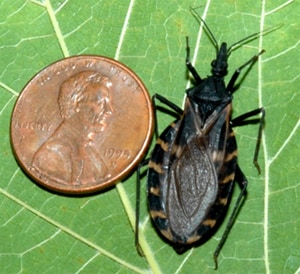
Triatoma gerstaeckeri next to a penny for scale. Photo courtesy S. Kjos.

Found only in Latin America, where it causes more deaths than any other parasitic disease, including Malaria .Chagas disease are caused by a parasite that is transmitted to humans by the bite of insects. 

Carlos Chagas, in his laboratory at the Instituto Oswaldo Cruz

Chagas disease is named after the Brazilian physician Carlos Chagas (picture), who discovered the disease in 1909. It is caused by the parasite, the Triatomine bug or Trypanosoma cruzi, which is transmitted to animals and people by insect vectors and is found only in the Americas (mainly, in rural areas of Latin America where poverty is widespread). Chagas disease (T. cruzi infection) is also referred to as American trypanosomiasis.


Chagas disease is endemic throughout much of occurs of  Latin America and so far had infected 10 million people, mostly residents of Bolivia, Mexico, Colombia and Central America. The triatomine bug thrives under poor housing conditions (for example, mud walls, thatched roofs), so in endemic countries, people living in rural areas are at greatest risk for acquiring infection. However, in the past decades it has been increasingly detected in the United States of America, Canada, many European and some Western Pacific countries. This is due mainly to population mobility between Latin America and the rest of the world. Less frequently, it is due to infection through blood transfusion, vertical transmission (from infected mother to child) or organ donation.

This has caused great alarm to many countries , This include in the United States, Chagas disease is considered one of the dangerous Neglected Parasitic Infections,  Its now a group of five parasitic diseases that have been targeted by CDC for public health action.

Various triatomine bugs in all life stages, from eggs to nymphs to fully grown adults. A variety of bug species, that share similar traits, are pictured. CDC estimates that more than 300,000 persons with Trypanosoma cruzi infection live in the United States. Most people with Chagas disease in the United States acquired their infections in endemic countries. Although there are triatomine bugs in the U.S. , only rare vectorborne cases of Chagas disease have been documented.

Roughly a quarter of the victims heart or intestines gradually grow abnormally by the diseases, which can lead to sudden death.   There is no vaccine for Chagas disease. Existing drugs are only effective at the early stage of the disease.

 ----------------------------------------------------------------
Various Triatomine Bugs in all Life Stages
Various triatomine bugs in all life stages, from eggs to nymphs to fully grown adults. A variety of bug species, that share similar traits, are pictured.


Signs and symptoms


Chagas disease presents itself in two phases. The initial, acute phase lasts for about two months after infection. During the acute phase, a high number of parasites circulate in the blood. In most cases, symptoms are absent or mild, but can include fever, headache, enlarged lymph glands, pallor, muscle pain, difficulty in breathing, swelling and abdominal or chest pain. In less than 50% of people bitten by a triatomine bug, characteristic first visible signs can be a skin lesion or a purplish swelling of the lids of one eye.

During the chronic phase, the parasites are hidden mainly in the heart and digestive muscle. Up to 30% of patients suffer from cardiac disorders and up to 10% suffer from digestive (typically enlargement of the oesophagus or colon), neurological or mixed alterations. In later years the infection can lead to sudden death or heart failure caused by progressive destruction of the heart muscle.

                                                     PAGE FROM THE CDC

                             http://www.cdc.gov/parasites/chagas/gen_info/vectors/index.html#id
------------------------------------------------------------------------------------------------

I think I found a triatomine bug. What should I do?

Triatoma sanguisuga
Triatoma sanguisuga Photo Courtesy: James Gathany

Triatoma gerstaeckeri next to a penny for scale. Photo courtesy S. Kjos.

Triatoma Protracta
Triatoma protracta Photo Courtesy: James Gathany

Please do not touch or squash the bug. Place a container on top of the bug, slide the bug inside, and fill it with rubbing alcohol or, if not available, freeze the bug in the container. Then, you may take it to your local extension service, health department, or a university laboratory for species identification. In the event that none of these resources is available in your area, you may contact CDC’s Division of Parasitic Diseases and Malaria (parasites@cdc.gov) for species identification or T. cruzi testing.

Any material containing bug parts or feces should also be submitted for testing, preferably in a plastic bag or clean sealable container. Surfaces that have come into contact with the bug should be cleaned with a solution made of 1 part bleach to 9 parts water (or 7 parts ethanol to 3 parts water)

How can I tell if the bug I’ve found is a triatomine and not another kind of bug?

There are many beetles and non-triatomine reduviid bugs that resemble the triatomine bug. Two examples of non-triatomine reduviid bugs that do not feed on human blood are the wheel bug and the assassin bug. Some plant-feeding bugs, such as Coreidae, also resemble the triatomine. If you are unsure if the bug you’ve found is a triatomine, you may wish to consult with an expert, such as an entomologist, for clarification.

Can I get Chagas disease from a triatomine bug?

Yes. However, the transmission of Chagas disease from a bug to a human is not easy. The parasite that causes the disease is in the bug feces. The bug generally defecates on or near a person while it is feeding on his or her blood, generally when the person is sleeping. Transmission occurs when fecal material gets rubbed into the bite wound or into a mucous membrane (for example, the eye or mouth), and the parasite enters the body.
It is important to note that not all triatomine bugs are infected with the parasite that causes Chagas disease. The likelihood of getting Chagas disease from a triatomine bug in the United States is low, even if the bug is infected.

Could I be allergic to the bite of a triatomine bug?

A girl with Romaña's Sign 

Romaña's sign, the swelling of the child's eyelid, is a marker of acute Chagas disease. The swelling is due to bug feces being accidentally rubbed into the eye, or because the bite wound was on the same side of the child's face as the swelling. Photo courtesy of WHO/TDR.

Yes. The saliva of certain types of triatomines can cause an allergic reaction in some people. An allergic reaction may be characterized by severe redness, itching, swelling, welts, hives, or, rarely, anaphylactic shock (severe allergic reaction). Persons at risk of anaphylactic shock should consult a physician to obtain medication to use in case of a bite. It is important to note that not all triatomines are infected with the parasite even though they may cause an allergic reaction.

The appearance of an allergic reaction after a triatomine bite does not mean that you have been infected with the parasite Trypanosoma cruzi, the cause of Chagas disease. The mild swelling that may develop at the site of parasite inoculation (where the parasite entered the body through the skin or mucous membranes) is called a chagoma. When the parasite enters the body through the conjunctiva of the eye, the swelling around the eye is called Romaña’s sign. Chagomas, including Romaña’s sign, usually last longer than an allergic reaction and are less likely to be severely itchy.

What do I do if I think I may have acquired Chagas disease?

If you suspect you have Chagas disease, consult your health care provider. Or, to find a physician familiar with diagnosis and treatment of Chagas disease and other parasitic infections, ask your general practitioner or primary care physician for a referral. You may wish to consider visiting a physician who specializes in infectious diseases. To locate a clinician in your area, please visit the American Society of Tropical Medicine and Hygiene’s Clinical Consultants DirectoryExternal Web Site Icon.


Flag Counter
Sunday, 14 July 2013

Five Important Recommendation that can Help to Prevent Cancer

People who  had observe more than four of the recommendations  by WCRF  were found to be at risk of the disease were 38 percent less than those who comply less than the four recommendation. These conclusions are based on statistical studies of men who are predisposed to the disease.The research published online in the journal Nutrition and Cancer was conducted in North Carolina Cancer Center are based on the treatment of prostate cancer.  The study include 2212 men aged 40 to 70 years who are newly diagnosed with cancer. 


Scientists from the University of California Comprehensive Cancer Center published the first study based and in compliance with the recommendations WCRF (World Cancer Research Fund - World Wide Fund for Research on Cancer). It has shown that with the right lifestyle, risk of prostate cancer is much less. The researchers also advise to adhere to the desired body mass index, physical activity, exercise, eating foods with a low caloric density (up to 125 kcal per 100 g food), fruits and vegetables are low in starch and beans.


5 important guidelines for the prevention of cancer:

1) Watch your weight. Studies have shown that overweight and obesity increase the risk of bowel cancer or breast cancer. Need to maintain a healthy weight through special diets and physical activity.

2) Be physically active for at least thirty minutes a day. Physical activity reduces the risk of cancer. Is any kind of physical activity, and the more the better. This requires a schedule of daily life and include physical exercises.

3) Limit consumption of energy-dense foods (foods high in fat and / or sugar, foods that are low in fiber) and avoid sugary drinks. The most dangerous food is hamburgers, fried chicken, pizza, fast food, candy bars and cookies. They can contain a lot of harmful substances, and excessive use may seriously affect health.


Sweet drinks such as cola or canned fruit juices can also affect weight. Thus should be discarded in favor of water, tea or coffee.

However, not all high-calorie foods can harm your health. Nuts, seeds and vegetable oils carry a higher energy value, are essential components of a healthy diet and can not affect weight. 

4) Limit consumption of red meats (such as beef, pork or lamb) and avoid eating processed meat products. There is good evidence that red and processed meats can cause colon cancer, heart disease and diabetes. Of processed meats should be avoided completely, because it harms the body in any quantity. Just do not abuse the bacon, ham, salami, corned beef, and the types of sausage.

5) Limit the intake of foods processed with sodium chloride. Experience shows that salt can cause stomach cancer and autoimmune disease. For a change of taste gamut daily meals you can try to use herbs or spices. It must be remembered that the food products, including bread and breakfast cereals may contain a significant amount of salt.

Try as Hard as Possible to follow your gut then your eyes....

Flag Counter
Saturday, 13 July 2013

10 Things You Should Know About Alcohol Drinks

Good or bad, but alcohol is a part of our lives. However, it is important to be aware of how and in what quantities to use it, because the effects are most likely to be negative and even dangerous. Here are 10 things you need to understand when drinking alcohol.


1. Alcohol is considered an aphrodisiac. Removes inhibitions and encourages communication. Researchers from Harvard have shown that alcohol stimulates unplanned sex in the ratio 41% vs. 8% of people who do not drink alcohol.

2. Headache pills have no effect. It is better to use the facilities of a hangover. You can start with a cup of coffee without sugar and milk, pressed juice of one lemon with or with out one teaspoon of honey, chicken broth or Chicken Soup by continue to take it in a few hours.

3. Alcohol is a toxin, and it is constantly consumed by the development of breast cancer in women. Moreover, it contributes to tumor development.

4. Alcohol is not a stimulant like caffeine, and does not gives more energy. Conversely, it has sedative properties.

5. Alcohol causes the following behavior problems: aggression, sexual candor, excessive talkativeness, the disclosure of secrets, lie and depression.

6. Alcohol disrupts sleep quality. Consumed in excess, it can lead to insomnia and prevents the body's ability to recover.

7. Alcohol contributes to cellulite. This is not the best ally of women who care about the silhouette.
8. Alcohol contributes to the development of depression. People who drink a lot are usually disappointed with their lives and doubt in their abilities. This type of behavior is completely devastating and can easily lead to addiction.

9. Alcohol contributes to mental disorders. Those who drank too much, as a rule, very easy to fall into a rage on others and depression.

10. Alcohol destroys memory in both the short and long term. And that is because it destroys the brain cell. And the information received during the day, at night to digest.

Flag Counter

Memories of loved ones as Motivation and to help relieve stress

moldovenii.md

Family photos on the desktop to help you motivate and beat stress, according to psychologists at Cornell University (USA). The results of their research scientists published in the Journal of Personality and Social Psychology. It turned out that the memories of loved ones help to quickly deal with unpleasant thoughts and generally make a person less susceptible to negative. A month after the experiment, those who looked at photos of loved ones, have fewer problems with the psychological and physical well-being.

Previously, it was shown that these thoughts help to relieve the stress caused by external factors. But we ourselves can be a great source of stress for ourselves: we remember a lot of unpleasant things - from failure to failure in examinations on the love front. Constant return to unpleasant memories is fraught with the development of depression, anxiety disorders, all of which ultimately affects the physical well-being, causing heart problems, etc.


To prevent this from happening, the authors recommend exercise in pleasant memories, not just enjoyable, but in those that are left of mental communication with another person, which are reminiscent of friendship, love and harmony. It is natural that such moments are primarily concerned with the immediate family and your loved one (of course, this is not taken into account the exceptional cases of severe family confrontations and mutual hatred after decades of marriage).

Those picture will also fire up your spirit and motivate you when the going get tough.
Flag Counter

Lack of sleep leads to anxiety

Lack of sleep can lead to anxiety, according to a U.S. study that highlights the special relationship between sleep and emotional hyperactivity disorder, according to lefigaro.fr. Lack of sleep contributes to the emergence of anxiety.

 How much do we need sleep to be healthy? 

Several studies presented in June at the congress organized by the American Academy of Sleep Medicine, analyzed the mechanisms by which a lack of sleep affects the body's level of anxiety.

This anxiety is not necessarily negative, however, it helps to prepare for dangerous situations. This is a survival mechanism. But when it is amplified and converted into hyperactivity, it becomes negative, and is characterized by severe stress and anxiety.

The problem of lack of sleep is not limited to the United States, it has become one of the public health problem in Europe. Although the French are far from the American record, they sleep an average of 6 hours, and 45 minutes, compared to 6 hours for the Americans, the "quota" of sleep is inadequate in terms of average daily requirement of sleep, it is estimated that 7 to 8 hours
Flag Counter
Saturday, 6 July 2013

Tips How to Replace Salt in Cooking

This is a 5 simple ways to use less salt in cooking for your good health and to help you cut back on sodium when cooking or at the table

Sodium chloride (salt) is essential to the body. The sodium in salt helps transmit nerve impulses and contract muscle fibers. Working with potassium, it balances fluid levels in in the body. But you only need a tiny amount of salt to do this, less than one-tenth of a teaspoon. The average American gets nearly 20 times that much.

The body can generally rid itself of excess sodium. In some people, though, consuming extra sodium makes the body hold onto water. This increases the amount of fluid flowing through blood vessels, which can increase blood pressure.

Most of the salt that Americans consume comes from prepared and processed foods. The leading culprits include snack foods, sandwich meats, smoked and cured meat, canned juices, canned and dry soups, pizza and other fast foods, and many condiments, relishes, and sauces — for starters. But enough comes from the salt shaker that it’s worth finding alternatives. Here are 5 ways to cut back on sodium when cooking or at the table:
  • Use spices and other flavor enhancers. Add flavor to your favorite dishes with spices, dried and fresh herbs, roots (such as garlic and ginger), citrus, vinegars, and wine. From black pepper, cinnamon, and turmeric to fresh basil, chili peppers, and lemon juice, these flavor enhancers create excitement for the palate — and with less sodium.
  • Go nuts for healthy fats in the kitchen. Using the right healthy fats — from roasted nuts and avocados to olive, canola, soybean, and other oils — can add a rich flavor to foods, minus the salt.

  • Sear, sauté, and roast. Searing and sautéing foods in a pan builds flavor. Roasting brings out the natural sweetness of many vegetables and the taste of fish and chicken. If you do steam or microwave food, perk up these dishes with a finishing drizzle of flavorful oil and a squeeze of citrus.

  • Get your whole grains from sources other than bread. Even whole-grain bread, while a healthier choice than white, can contain considerable sodium. And bread contains salt, not just for flavor but to ensure that the dough rises properly. You can skip that extra salt when you use whole grains outside of baking. Try a Mediterranean-inspired whole-grain salad with chopped vegetables, nuts, and legumes, perhaps a small amount of cheese, herbs and spices, and healthy oils and vinegar or citrus. For breakfast, cook up steel-cut oats, farro, or other intact whole grains with fresh or dried fruit, and you can skip the toast (and the extra sodium).

  • Know your seasons, and, even better, your local farmer. Shop for raw ingredients with maximum natural flavor, thereby avoiding the need to add as much (if any) sodium. Shop for peak-of-season produce from farmers’ markets and your local supermarket.

Flag Counter
Saturday, 15 June 2013

Does Eating at night adds weight? Yes it Does

Recently, the diet in many countries has changed as people now has greater access to food to variation of food and the money to buy them. With the busy life in the cities many people has opt to fast food. In addition, many sit up late, spending time watching TV. And when people are awake, they tend to eat and eating is no longer a hassle as you can easily cook them at home such as instant noodle or order from fast food restaurant which are open 24 hour.

Always eating during the day and even late at night? This could bring down the normal cycles of metabolism, experts warn. Increased body weight is partly due to irregular patterns of food consumption due to excessive calories.

In the U.S. study, mice were fed food rich in fat, and allowed them to eat when they want to. As expected, the mice recovered. For comparison, those mice which allowed only for 8 hours during the day, gained less weight, despite the fact that they consume as many calories as the mouse-eating erratically, reports www.myhealthnewsdaily.com .

The results suggest that limiting the mealtime is a good way to help people to get better.

"Everybody has their own body clock" - said the researcher Satchidananda Panda of the Salk Institute for Biological Studies in the United States. "This means that our liver, intestine, muscle, and other organs at a certain time work at peak efficiency, and at other times, more or less" sleep. "

During the study, which lasted 18 weeks, it became clear that food limitation in in eating time helped the mice to protect themselves from the negative effects of food rich in fats. Moreover, they observed improvement in the metabolism, compared with those who ate the day and night. Mice gained 28 percent less weight than mice that were fed without restriction, and they had less liver damage.
Flag Counter

Salt - the world's leading killer

Salt, or sodium chloride, is essential to the maintenance of human health, All we need to receive daily  is no more than 350 milligrams.  

This is approximately half the weight of a raisin. or  the simplest meal such as one piece of store bread or a bowl of cereal for breakfast . It is proven that consumption more than that are not beneficial to our health and can lead to various chronic danger to our health 
  

Most Europeans and Americans consume 3,500 milligrams of salt per day mostly use in preparing meat or in the fast food chain business alone.


Moreover, almost every products contain high amount of salt and we consume it in amounts that many consumers can not even be imagined. Potato chips - it's one of the biggest culprits in the world as in a single serving contains 250 milligrams of salt. The largest amount of salt contained in canned vegetables, soups - semi-finished products and frozen dinners, as follows: in each of them can hold more than 1,000 milligrams of salt, according to telegraph.co.uk.
 
The largest amount of salt contained in food is from food that is prepared outside the home, particularly in the fast-food restaurant. it may be more than 2,000 milligrams per meal or 6 time of the daily requirement that we need in a day. 
 
In addition, the salt - is a powerful instigator of thirst, which increases the sales of soft drinks. Should be a gradual reduction in salt intake, because people are very accustomed to it, and become less sensitive due to "chronic" exposure. That is why, slow deliverance of mankind from the salt can go virtually painless and unnoticed.
 
Even small reductions in salt intake can bring a big significant benefits. That's because a lot of people are at high risk of developing high blood pressure, so, of course, reducing salt intake can significantly reduce this risk. Many people are already suffering from high blood pressure, and in order to survive they have to rely on expensive drugs. In the US alone 1 out of 10 Death that happen there at blamed by salt. Studies show that in  2010 in the US, 2.3  million died because of salt

Let say if we just reduce our daily salt intake to 350 milligrams at the population level it can prevent 12. million  deaths from stroke or cardiovascular disease each year around the worlds


Recommend Reading:

High Salt Consumption Linked To 2.3 Million Deaths In 2010 in the USA

Thursday, 13 June 2013

Healthy oils and nuts can save the lives of men with prostate cancer


Healthy oils bottle and nuts

 "Eating healthy oils and nuts increases the antioxidant in plasma insulin lowers rates and reduces inflammation, which slows down the progression of prostate cancer," - said lead author Erin\Richman , in the Department of Epidemiology and bio-statistics.

Patients with prostate cancer can significantly increase your chances of overcoming the disease by replacing animal fats and carbohydrates in the diet to vegetable fats, Claim the scientists from the U.S, whose work is published in the journal JAMA Internal Medicine. According to a press release from the University of California (University of California), who participated in the study in 4.6 thousands of men with prostate cancer without metastases who received a diagnosis in the years 1986-2010.


Among useful for patients with prostate cancer products, are olive, sunflower oil and avocado oil.


In the U.S., home to about 2.5 million men with prostate cancer. Each year with new diagnosis of prostate cancer among  250,000 men. The authors estimated that one in six Americans gets sick by male prostate cancer.

In the study, the predominant cause of death was cardiovascular disease (31%), in second place was directly prostate cancer (21%).

The researchers found that men who replaced 10% of their daily diet, represented by carbohydrates in vegetable fats, 29% reduced risk of death from cancer by 26% - from other causes.

Using healthy oil lower the  reduced risk for prostate cancer death 29% . A supplement in the form of a handful of nuts reduced the risk of death by 18%
Flag Counter

Experts recommend these healthy products for people over 40

Ian Marber, one of the leading experts on nutrition in the UK, said that as soon as we reach the age of 40, our body begins to change. Changing the mechanism of digestion, and the risk of developing heart disease and diabetes increases. To avoid health problems, a nutritionist recommends a review of your diet and include more of these foods:

Oat
Oats help lower bad cholesterol. And, moreover, oats rich unique antioxidants that protect against atherosclerosis, which gives it an advantage over other cereal.


Cherry
Eating cherries helps prevent diseases such as gout and arthritis.


Almonds
According to Ian Marber, regular consumption of almonds helps to improve blood sugar and reduce cholesterol levels in the blood.


Oil fish / Fish fat with oil
Omega-3 fats, which are the main source - fatty fish, help to regulate the heart rate and regulate blood pressure, reducing the risk of heart rhythm disturbances - arrhythmias.


Soy
Cnizhayut cholesterol and increase bone density, especially postmenopausal women, and improve male fertility.


Tomatoes
Tomatoes are an excellent source of the powerful antioxidant lycopene, which protects against cancer and atherosclerosis.


Whole milk
Whole milk may help combat age reduction of muscle mass. We must especially pay attention to people over 50 years.
Wednesday, 12 June 2013

Where are the most germs that you can easily find?


On average, each adult per minute can touch up to 30 items, including those that live a great number of microbes, such as switches, door handles, telephone receivers, and remote controls. In my home we have something we can control the spread of germs through periodic cleaning. But if we leave the house and go to some public place to eat or buy food, or go to the doctor?
 
Have you ever seen anyone washing or cleaning the menu? Cold and flu viruses can survive for 18 hours on hard surfaces, said www.care2.com. If you visited a popular restaurant or cafe, thousands of people who have taken up arms in the menu, you could transfer dangerous microbes. Do not let the menu covered your plate or appliances and wash your hands after you make the order. Or you can use antibacterial wipes.
 
It is highly unlikely that the eatery try to regularly disinfect containers for condiments and sauces. In reality, many people do not have the habit of washing hands before eating. Better before pouring the sauce yourself or salt dish, wipe container disinfectant. If you wrap up its regular cloth or handkerchief, it has no effect, as the napkins are usually very porous and germs easily seep through.
 
Do not think that you can always use the public toilet and do not touch it either to a single knob! Better wrap paper hand towel after washing your hands - thus microbes with the door handle will not fall on the surface of the skin. Probably someone from the outside might think that you mikrofob, but you should not think about what other people think - because you'll never see these people, but you will be the only one of all those who do not pick up the infection.
 
About 25 percent of dispensers for liquid soap in public places are infected with all sorts of fecal bacteria! Soap, on which the "live" bacteria seems nonsense, but it was confirmed by recent studies. You should wash your hands well with hot water for 15-20 seconds to flush the "dirty soap", or you can use an antibacterial hand gel-based alcohol.
 
The clinic where she is a doctor, not the safest place if you do not want to face the microbes. Read books and magazines, who brought with them. It is better not to touch objects in the waiting room. Take advantage of its disinfectant wipes and gels that contain 60 percent alcohol.
 
About 70% of the lemon slices that are "planted" on the edge of a cocktail glass at a restaurant supply, contain disease-causing bacteria! When the researchers ordered drinks at 21 restaurants, they found 25 different microorganisms that are "accommodated" by 76 lemon drop, which they have applied. Among them showed E. coli and other fecal bacteria.

The 12 germiest places in your daily life

Health magazine senior editor Frances Largeman-Roth pinpoints the 12 germiest places you’re likely to encounter during an average day and devises ways for you to keep clean. After all, the fight is in your hands. Literally. Eighty percent of infections are spread through hand contact. So wash up, people, and get ready to wage a bit of germ warfare of your own:

 
1. Your kitchen sink Kitchen sinks are dirtier than most bathrooms. There are typically more than 500,000 bacteria per square inch in the drain alone. Plus your sponge, basin and faucet handles are crawling with bacteria as well.

Reduce the risk: Clean your kitchen counters and sink with an antibacterial product after preparing or cleansing food, especially raw fruits and vegetables, which carry lots of potential pathogens like salmonella, campylobacter and E. coli. Wash your hands as well with warm, soapy water for 20 seconds (long enough to sing “Happy Birthday”). Sanitize sponges by running them through the dishwasher’s drying cycle, which will kill 99.9 percent of bacteria on them. As for the sink, clean it twice a week with a solution of one tablespoon of chlorine bleach and one quart of water. Scrub the basin, the pour solution down the drain.

2. Airplane bathrooms It may not be a shock that there are a huge number of germs in most public bathrooms, but experts agree the cramped and overused ones on airplanes are the worst. There are often traces of E. coli or fecal bacteria on the faucets and door handles because it’s hard to wash hands in the tiny sinks. And the volcanic flush of the commode tends to spew particles into the air, coating the floor and walls with whatever had been swirling around in it.

Reduce the risk: Toilet seats are surprisingly clean, but use the paper cover when available. After using the toilet, wash and dry your hands thoroughly, and use a paper towel to handle the toilet seat, lid, tap and doorknob. Put the lid down before you flush. If there’s no lid, turn your back to the toilet while flushing and beat a hasty retreat.

3. A load of wet laundry Any time you transfer underwear from the washer to the dryer, you’re getting E. coli on your hands. Just one soiled undergarment can spread bacteria to the whole load and machine.

Reduce the risk: Run your washer at 150 degrees (you can check the temperature of your washing-machine water with a candy thermometer) and wash whites with bleach (not the color-safe type; it doesn’t pack the same punch), which kills 99.9 percent of bugs. Transfer wet laundry to the dryer quickly so germs don’t multiply, wash underwear separately (there’s about a gram of feces in every pair of dirty underwear) and dry for at least 45 minutes. Wash your hands after laundering.
Matthew Cavanaugh  /  EPA file
 
4. Public drinking fountains Drinking fountains are bound to be germy, but school fountains are the worst, with anywhere from 62,000 to 2.7 million bacteria per square inch on the spigot.
Reduce the risk: Send your child to school with plenty of their own beverages and tell them to wash their hands throughout the day.

5. Shopping cart handles Saliva, bacteria and fecal matter are just a few of the substances found on shopping cart handles. Cart handles rank high on the yuck scale because they’re handled by dozens of people every day and, of course, raw food carries nasty pathogens.
Reduce the risk: Many stores have dispensers with disinfectant wipes near the carts. If your store doesn’t, bring your own wipes and give the handle a quick swab. Or carry along a cart cover like the Grip-Guard or Healthy Handle.

6. ATM buttons If you’re not careful, you might pick up more than quick cash from your local ATM. These buttons have more gunk on them than most public-bathroom doorknobs! ATMs aren’t frequently cleaned, and are regularly touched — a perfect combination for a lot of germs.
Reduce the risk: Carry an alcohol-based hand sanitizer with you and rub it on hands after visits. Also be sure to do it after you handle paper money, which actually carries quite a few germs, too.

7. Your handbag Recent studies found that most women’s purses had tens of thousands of bacteria on the bottom and a few were overrun with millions. Another study found bugs like pseudomonas (which can cause eye infections) and skin-infection-causing staphylococcus bacteria, as well as salmonella and E. coli.
Reduce the risk: Instead of slinging your bag on the floor, hang it on a hook whenever possible — especially in public bathrooms — and keep your bag off the kitchen counter. Stick with leather or vinyl purses, which are typically cleaner than cloth.

8. Playgrounds There’s just no way to put this delicately: Children tend to ooze bodily fluids and then spread them around. When researchers sampled playgrounds, they found blood, mucus, saliva and urine. Pair those findings with the fact that children put their fingers in their mouths and noses more than the rest of us, and it’s easy to understand why Junior (and maybe his mom or dad) has the sniffles.
Reduce the risk: Carry alcohol wipes or hand-sanitizing gel in your purse, and clean everybody’s hands a couple of times during a park visit, especially before snacking. Pick warm sunny days for outdoor play: The sun’s ultraviolet light is actually a very effective disinfectant. Most bugs won’t survive long on surfaces that are hot and dry.

9. Mats and machines at health clubs Antibiotic-resistant staphylococcus has been found on yoga mats and cardio and resistance machines. At high schools, antibiotic-resistant-staph infections have been transmitted through wrestling mats. The same thing could happen at health clubs.
Reduce the risk: Wipe down machines with antibacterial wipes before working out. Bring your own yoga mat or cover a loaner with your towel. Shower after a workout and soap up your skin to rinse off any bacteria you may have been exposed to, as thorough washing gets rid of antibiotic-resistant staph.

10. Your bathtub Shocking, but true: The place you go to get clean is quite dirty. A recent study found staphylococcus bacteria, a common cause of serious skin infections, in 26 percent of the tubs tested, as compared with just 6 percent of garbage cans. Tubs typically had more than 100,000 bacteria per square inch! You’re washing germs and viruses off your body and the tub is a fairly moist environment, so bacteria can grow.
Reduce the risk: Once a week, apply a disinfecting cleaner to the tub and actually scrub. Then you need to wash the germs down the drain with water and dry the tub with a clean towel. If you leave the tub wet, germs are more likely to survive. If someone who uses the tub has a skin infection, scrub it afterward with a solution of two tablespoons bleach in one quart of water.

11. Your office phone This is enough to make you dial 911: Office phones often have more than 25,000 germs per square inch, and your desk, computer keyboard and mouse aren’t far behind. Phones, including cell phones, can be pretty gross because they get coated with germs from your mouth and hands.
Reduce the risk: Simply cleaning your desk, phone and keyboard with a disinfecting wipe once in the middle of the day will kill 99.99 percent of the bacteria and viruses.

12.The hotel-room remote control What’s the first thing you do when you settle in at a hotel? You grab the remote control and switch on the TV — you, and the hundreds of other guests who’ve stayed there. How dirty is it? A recent study tested various surfaces for the cold virus after a group of sick people had stayed overnight and found the virus on the remote, door handles, light switches, pens and faucet handles.
Reduce the risk: Clean the remote control, phone, clock radio, door handles and light switches with germicidal wipes.

For more ways to fight germs, visit www.health.com

Find out what your health problems, depending on the zone of the face that is affected by acne


Interesting article.... Seen there a good side to it when you notice a pimple on the face when washing your face at the mirror in the morning. In claim that the skin reacts to the state of the internal organs.
 
Below is an explanation of what is meant by acne or other skin problems, depending on the zone of the face on which they appear.
 
1 and 3: The digestive system. Eat less processed food or junk food, reduce fat in your diet, drink more water and eat vegetables with high water content, such as cucumbers.

2: Liver. Eat as little as possible of alcohol, fats and dairy products. This zone indicates a food allergy, so you would do well to do the test in this regard. In addition, perform moderate exercise 30 minutes a day and get enough sleep so that your liver a rest.

4 and 10: Kidneys. Ensure that you are sufficiently hydrated! Consume less carbonated drinks, coffee and alcohol, as they contribute to dehydration.
 
5 and 9: The respiratory system. Acne in these areas tend to appear in smokers or those who suffer from allergies. If you have any of these problems, reduce the consumption of sugar and more often in the open air. Also, try to maintain an alkaline balance in your body, avoiding foods that violate it (meat, dairy products, caffeine, alcohol and sugar). Add in the daily menu of more alkaline foods such as green vegetables or fresh juice of wheat.
 
6 and 8: Kidneys. Any problem around the eyes (including blue circles) indicate dehydration. Drink lots of water!

7: Heart. Check your blood pressure and vitamin C. Eat less spicy food, less meat and more to be outdoors. Also look for solutions to reduce cholesterol levels, such as the replacement of "bad" fats "good" fats, such as omega-3 and 6, which are found in nuts, avocados, fish and flax seeds. In addition, given that the pores in the area expanded, be careful with the choice of cosmetic products, avoiding those that irritate the skin or the period which has already expired.

11 and 13: Hormones. This zone indicates the stress and hormonal changes. And although you can not always avoid them, you can reduce their effect. You need to get enough sleep, drink enough water, eat green vegetables and take care of the cleanliness of the skin. Another interesting thing: acne in this area point to the time of ovulation and the fact in which the ovary (left or right) is the process.
 
12: Stomach. Enter more fiber in the diet, reduce the amount of toxins and drink herbal teas to improve digestion.

14: The infection in the body. Acne in this area may indicate that your body fights bacteria to prevent disease. Rest better (it would be great if you could take a few days off), go through a course of yoga, breathe deeply, drink enough water and do not have to worry so much!
It would be good to take into account the above information, but we strongly recommend that, when you are confronted with the problems of the skin, consult a dermatologist for proper diagnosis and treatment.

Source: perfecte.ro

Jogging extends the life of 6 years


Even if jogs to devote an hour a week, you can get amazing results. This is confirmed by the data on the life expectancy of Danes in 2000, practicing jogging, reports 20minutes.ch.
60 minutes of jogging per week (one or two doses) increase the life expectancy of men by 6.2 years. Women are just as "serving" running gives 5.6 extra years of life.
 
Thus, concludes the study leader Peter Shner, it can be argued that regular jogging actually prolongs life. But the most interesting - the fact that this effect is given exactly jog at a moderate mode: lovers too live on less intensive exercise.
 
Curiously, published last year, a similar study on life expectancy cyclists gave a different result: it "champions" for longevity were those who pedaled to the limit forces. The difference can be explained in particular by the fact that the average person spends at jogging more effort than when riding a bicycle in the medium-intensive mode.

Simple 5 foods that will fill you with energy at any time of the day


Do you feel sleepy during the day, and coffee seems to no longer work? Try these quick snacks that will give you the energy instantly.

1. Banana with peanut butter
You need a medium-sized banana, sliced, and a spoon of peanut butter. The result is a tasty snack and a good source of energy.

2. A mixture of nuts and dried fruits
Great snack and the perfect combination of fat and protein that will put you on your feet.

3. Cereal bar
Made from whole grain and full of fiber and protein, it will satisfy hunger at any time of the day and give you strength.

4. Low-fat yogurt with muesli
Grain cereals, nuts and dried fruit blends well with the refreshing yogurt. They give an interesting taste of yogurt. Add the honey and some fresh berries and get the perfect snack.

5. Raisins
Want more energy? Take a pack of raisins. It is rich in antioxidants and energy and poor in fat and calories.


Diseases caused by air conditioning


Number of ordinary people rising in this period, even if the temperature rises above 30 degrees Celsius. ENT doctors say that air conditioning is the main culprit that viral respiratory infections are increasingly common in recent years.
 
Experts have warned that with the arrival of the heat there were the first cases of sinusitis, rhinitis, otitis media, pneumonia and bronchitis. The big difference between the room temperature and the outside leads to nasal congestion and headache. 

Attention, the air conditioner is a fertile ground for viruses. Thus, if the filters are not cleaned properly risk rhinitis and pneumonia even quite high.
 
Experts point to the danger that can occur when the air conditioner is set at too low temperature compared to the external one. According to doctors, those suffering from cardiovascular disease may occur heart failure, because it has to do more to adapt to the temperature. To avoid this risk, doctors recommend that the difference between the outer and the inner temperature does not exceed five degrees Celsius.

Image: noutati. 

Debunked the myth of The need of drinking 2 liters or 8 glass of water a day

 If you just can not bring myself to drink 8 glasses of water a day, there is no reason to do it. The latest study debunked the popular myth that we need to drink about 2 liters or 8 glasses of water a day to fight dehydration. In fact, we have enough fluids to maintain the desired water content, which we get from food and drinks, including those that contain caffeine, such as coffee and tea.
 
Glaceau Smart Water, 33.82-Ounce (Pack of 12)
As it turned out, the idea of ​​an 8-ounce glasses of water a day is no longer considered correct recommendation. It is best to drink when you feel thirsty, experts advise.

In fact, not too bad to drink 2 liters of water a day, but it is not scientifically proven. It is believed that this recommendation came in the 1940s when the Department of Food and Nutrition Board of the American National Research Council said that adults should consume about 2.5 liters of water a day.

However, many did not consider the second part of the recommendation, which stated that most of the water we get from the foods that we eat. Besides that the report was not based on any solid evidence, it was just an opinion.

A few years later, another famous American nutritionist said something similar about 8 cups of water a day, but he also added that it may be in the form of coffee, tea, milk, and other beverages. Also, a good source of water are fruits and vegetables.

Water is considered a means of suppressing appetite, but the consumption of foods with a high water content such as watermelon or grapefruit leads to  greater weight loss than if you refuse to eat and drink more water.

 
Glaceau Smart Water 
Flag Counter

What is Inner Feelings


They are so much verbal confusion on the meaning of feelings. I have listen on conversation that touch on it usage . Such as the words as inner feelings. In reality what is Inner Feelings? First let talk on feeling it self.

Most people confuse of it meaning where most of them relate feelings and physical sensations (sense of touch or sensation of cold - the so-called external senses ), and the emotional, inner feelings. The feeling of joy or sadness, fear, pride or a sense of love ...

Inner feelings in academic psychology has been little studied, and they are extremely popular in the field of practical psychology and even more in human life, where they are called simply - feelings.

Now what is inner feealing?

If a young person is to talk about their feelings to a girl, he tells her not about the features of your perception of the outside world, and he reveals his hopes and dreams, their fears and their passion. This - his inner feelings, this is what is referred to his soul.

But inner feeling are much to do with a person culture and experience or a  person with different level of development , will have other feelings or no feelings at all.

For an example if a person who saw a drowned kitten and you ask them"what are your feelings about what just happened," they might give variable answer from sad, anger. regret. remorse or no feeling at all. ( Being heartless would be the wrong assumption as the person might had understand that everything will die one day or had seen or involve in tragedies that made they feeling numbs to it )
Related Posts Plugin for WordPress, Blogger...

Total Pageviews

Theme images by andynwt. Powered by Blogger.
 

© Red Hibiscus, All Rights Reserved
Design by Dzignine and Conceptual photography